Pol's Business Talks / field note
How to Calculate Gross Income

By Arthur Sloan
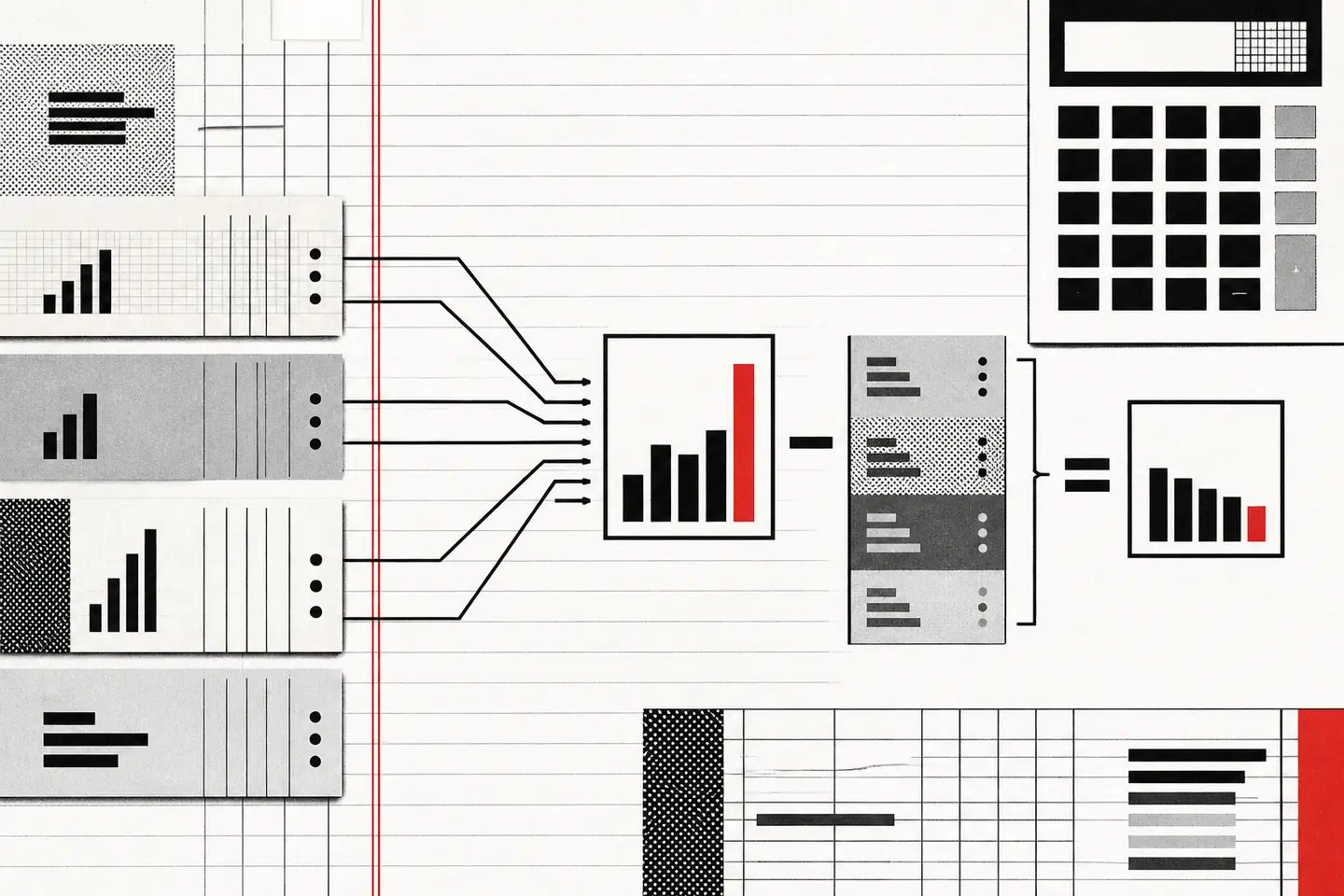
Gross income is income measured before taxes, payroll deductions and, in some contexts, expenses. It is not the amount left in a bank account after deductions. The correct calculation depends on whether you are measuring an employee's pay, a self-employed person's receipts, a household's combined income or a business's income.
Start by defining the period and purpose. A monthly budget, annual tax return and loan application may use different periods or counting rules. Read the relevant instructions before choosing which income sources to include. As a general starting point, gross income generally means earnings before taxes.
Gross Income and Net Income
For an employee, gross pay is total pay before income tax, pension contributions, insurance premiums or other deductions. Net pay is what remains. If gross pay is 4,000 and deductions are 900, gross income is 4,000 and net pay is 3,100.
Taxable income is another figure. Some earnings may be excluded from tax, while some pre-tax contributions reduce taxable income without changing gross pay. Adjusted gross income is also a specific tax concept in the United States: adjusted gross income is reported on Form 1040, line 11. Elsewhere, use the definitions supplied by the relevant tax authority.
For a business that sells goods, gross income commonly means sales after returns and allowances, minus the direct cost of the goods sold. Net income subtracts operating expenses, interest and taxes as well. A service business without inventory may use total client revenue as its starting gross figure.
Gather the Right Records
Use records for one consistent period. Employees should collect payslips and annual pay statements. Self-employed people should use invoices, sales records, payment reports and bank statements. A business may also need inventory and production-cost records. Landlords should keep rent records separate from property expenses.
Do not treat every bank deposit as income. Transfers between your own accounts, loan proceeds, repayments, owner contributions and documented reimbursements may increase an account balance without representing earnings. Match deposits to payslips, invoices or other supporting records, and investigate unexplained amounts before including them.
Use year-to-date pay only when it covers the whole period you are measuring. Otherwise, add the gross amount from each payslip. For business receipts, choose the accounting basis required for the report and apply it consistently; do not mix invoiced amounts with received amounts without checking for duplicates.
Calculate Gross Income as an Employee
For fixed annual salary, the stated salary is normally the starting figure. If you only know periodic gross pay, multiply it by the number of pay periods in a full year:
- weekly gross pay × 52;
- fortnightly gross pay × 26;
- twice-monthly gross pay × 24; or
- monthly gross pay × 12.
These multipliers assume a full year on the same schedule. If employment started or ended during the year, add actual payslips instead. Do the same when pay varies significantly, unpaid leave occurred or the payroll calendar contains an unusual extra period.
For hourly work, multiply the hourly rate by paid hours, then add overtime, shift payments, commissions, tips, bonuses and taxable benefits that belong to the period. A person paid 22 an hour for 40 hours a week earns regular weekly gross pay of 880. Over 52 paid weeks, that is 45,760 before extra earnings.
A bonus counts in the period in which the applicable instructions recognise it. Do not annualise a one-off bonus as though it recurred every month. If monthly salary is 4,800 and one bonus is 350, that month's gross pay is 5,150. If no other bonus is paid, annual gross pay is 57,950: 4,800 × 12, plus 350.
Calculate Self-Employment Income
For a self-employed person, begin with customer payments or earned revenue under the required accounting method. Include service fees, sales, commissions and other business receipts. Record payment-processing fees and ordinary business costs separately instead of subtracting them from the amount customers paid.
Suppose a freelancer receives 42,000 for design work and 1,800 for a separate consulting project. Gross receipts are 43,800. If software, equipment, advertising and contractor costs total 6,200, those costs may reduce profit, but gross receipts remain 43,800. Profit before tax would be 37,600 if all those costs are allowable and no other adjustments apply.
A lender, landlord or benefit agency may ask for net self-employment income rather than gross receipts. Supply the figure requested, not the one that is easiest to calculate. If earnings fluctuate and an average is allowed, divide income for the accepted period by the number of months in that period.
Calculate Business Gross Income
A retailer or manufacturer usually starts with sales revenue, subtracts refunds and allowances, then subtracts cost of goods sold. Direct costs can include inventory, raw materials and production labour, depending on the accounting rules used. Rent, general advertising, office supplies and administrative wages are normally operating expenses rather than cost of goods sold.
For example, sales of 180,000 less 70,000 in cost of goods sold produce gross income of 110,000. Rent and other operating expenses are considered later when calculating net income. In this context, Business gross income commonly equals revenue less cost of goods sold.
Service businesses often have no inventory, so their gross income may begin with revenue after refunds or allowances. Industry-specific accounting can differ. Use the classifications required for the accounts, tax return or application rather than moving costs between categories to produce a preferred result.
Add Other Personal Income
Depending on the purpose, personal gross income can include rental receipts, interest, dividends, investment gains, pension payments and other recurring income. Tax reporting may use a broader definition than payroll because it combines multiple taxable income streams.
Keep gross receipts distinct from profit. A property owner who receives 24,000 in rent has 24,000 in gross rental receipts before repairs, insurance, finance costs or management fees. A calculation requested by a tax authority or lender may later allow some of those costs.
For household or joint income, calculate each person's eligible income separately and then add the results. If one applicant earns 5,200 a month and another earns 3,400, combined monthly gross income is 8,600. Check whose income the application permits; some rules cover applicants only, while others include every adult in the household.
Avoid double counting shared rent, jointly owned business receipts or money transferred between household members. Assign each income stream once and keep documents showing how the combined total was reached.
Handle Adjustments and Exclusions Carefully
Gross pay, gross receipts and taxable gross income are not interchangeable. A pension contribution may leave gross pay unchanged while reducing taxable wages under local rules. Business expenses reduce profit, not necessarily gross receipts. Cost of goods sold is treated differently from an ordinary operating expense.
Some receipts may be excluded from taxable income, subject to conditions. Depending on the jurisdiction, examples can include certain gifts, inheritances, support payments, insurance proceeds, scholarships or documented expense reimbursements. Do not assume an exclusion applies merely because a payment resembles one of these categories. Check current official guidance for the place and reporting period concerned.
Keep evidence for exclusions as carefully as evidence for earnings. A reimbursement should connect to the expense it repays. A loan should have loan records. A transfer should be traceable to the originating account. Clear records prevent non-income deposits from inflating the result.
Common Calculation Mistakes
- Using net pay: begin with gross pay on the payslip, not the amount deposited after deductions.
- Omitting irregular earnings: review the full period for overtime, tips, commissions, bonuses, freelance fees and other non-routine payments.
- Subtracting expenses too early: separate gross receipts, gross income and net profit before applying costs.
- Counting deposits twice: reconcile invoices, payment reports and bank records so one payment appears once.
- Mixing periods: do not combine monthly income from one source with annual income from another.
- Assuming one definition fits every form: follow the instructions for the tax return, application or financial statement.
A Practical Calculation Checklist
- Write down the purpose and exact start and end dates.
- List every possible income source for that period.
- Match each amount to a payslip, invoice, statement or receipt.
- Remove transfers, loans, owner contributions and other non-income deposits.
- Calculate each source under the definition that applies to it.
- Add the eligible amounts without subtracting deductions or expenses prematurely.
- Compare the total with year-to-date or annual records and resolve differences.
- Keep the calculation and supporting documents with the submitted form.